
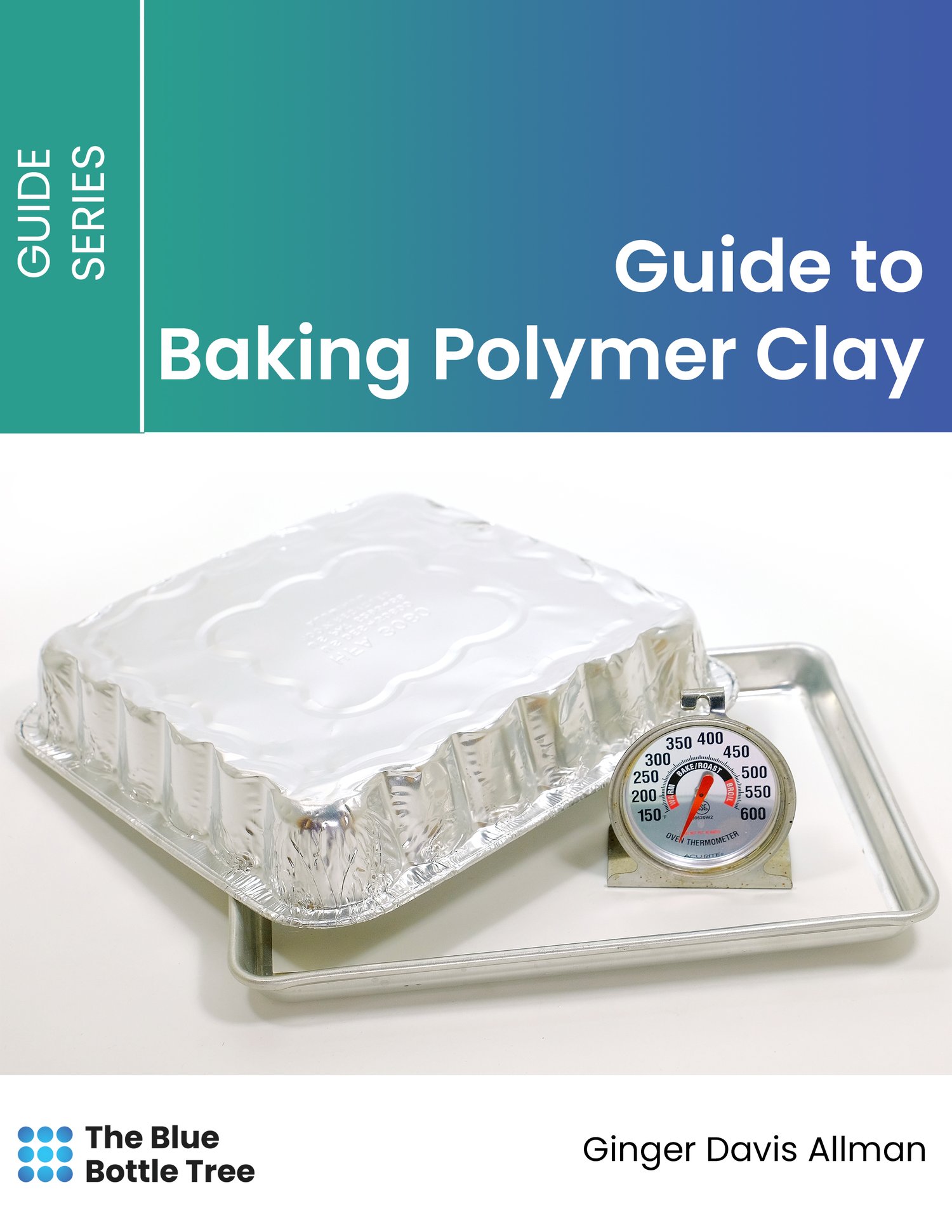
Guide to Baking Polymer Clay
Guide to Baking Polymer Clay
You followed the package directions, and your piece still snapped in half. Or it came out of the oven brown, scorched, or covered in tiny bubbles. Maybe your pieces bake perfectly one day and come out brittle the next, and you can't figure out why. This guide is all about what and why, not just blindly telling you what to do.
Baking is where a lot of good polymer clay work gets ruined, and much of the baking advice online contradicts itself. This guide explains what is happening inside your oven and inside the clay, so you can bake with confidence and recognize the cause when something goes wrong.
Is this guide for you?
- Your baked pieces crack, crumble, or break when you flex them.
- White and translucent clays turn yellow, brown, or amber in the oven.
- You aren't sure your oven is baking at the temperature it claims.
- You bake in a toaster oven, a tabletop oven, or an oven you don't trust.
- You mix brands and don't know which temperature to use.
- Bubbles, lumps, or cloudy spots appear after baking.
- Sculptures sag, delicate parts droop, or beads get marked where they touch the pan.
- You wonder whether baking polymer clay in your kitchen oven is safe.
- You've had a piece burn and never want it to happen again.
The guide also includes a troubleshooting flowchart and two checklists that walk you through a failed bake, one step at a time.
This 38-page PDF is readable on any device, including your phone. It's formatted for US letter paper and prints on A4 with the "shrink to fit" setting. The clickable table of contents takes you straight to the section you need.
This is the newest edition (Issue 3.0, updated for 2026).
NOTE: I develop, write, photograph, and hand-format my tutorials 100% myself. They are not AI-generated in any way.